On Dropping In
Now's not the time to go rogue... completely.

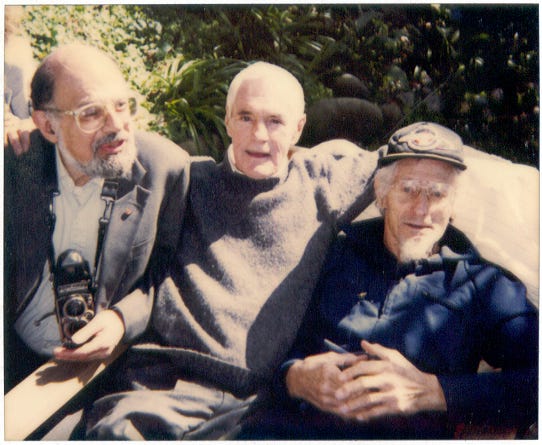
Speaking to a group of approximately 30,000 hippies in Golden Gate Park in 1967, Harvard University clinical psychologist and all-around era-appropriately questionable human being Timothy Leary unleashed a phrase that would become the mantra of a generation — “Turn on, tune in, drop out.”
Leary elaborated on the phrase in his autobiography nearly two decades later:
Turn on meant go within to activate your neural and genetic equipment. Become sensitive to the many and various levels of consciousness and the specific triggers engaging them. Drugs were one way to accomplish this end.
Tune in meant interact harmoniously with the world around you—externalize, materialize, express your new internal perspectives.
Drop out suggested an active, selective, graceful process of detachment from involuntary or unconscious commitments. Drop Out meant self-reliance, a discovery of one's singularity, a commitment to mobility, choice, and change.
Dropping out became the part that would filter into popular usage, and it is still making the rounds today. Circulating through homesteading circles here in the North Country, I’ve heard it used often, even now, six decades later. Drop out of society. Drop out of the rat race. Drop out of capitalism. These are some of the goals people in these circles are aiming for.
But the thing is, Leary revised the phrase just a few weeks later at the Houseboat Summit with Allen Ginsberg, Alan Watts and Gary Snyder:
I would agree to change the slogan to ‘Drop out. Turn on. Drop in.'
This came in response to what he felt was a misunderstanding of his original intent. From his autobiography:
Unhappily my explanations of this sequence of personal development are often misinterpreted to mean “get stoned and abandon all constructive activity".
In grasping on to only the last part of the sequence, many people had abandoned the first two steps. Leary’s revisal of the phrase was not a revisal of his thoughts on the matter — it was a clarification for those who had skipped over the first part.
This past week, I’ve been a little disheartened to see liberal and, to a much lesser extent (it has to be said), leftist folks immediately fold like a bunch of lawn chairs. Liberals especially. Especially the liberals.
Watch what you say online. Buy a notebook and keep your true thoughts there. We’re cooked. It’s over.
No, my darlings. It has just begun.
I cannot emphasize this enough: Fascism relies on you pre-complying. It relies on fear and making an example out of the few, so that the many put themselves in line without the regime having to lift a finger. Don’t put yourself in line. Do not pre-comply.
Instead, take a deep breath and good look around. We are far from cooked. It’s just getting a little toasty.
The bigger practice of dropping out is what I’ve mostly returned to talk about. That’s the self-reliance bit, where you don’t have to worry about getting fired, because you can take care of yourself.
But you cannot do this alone. You need others. And that’s where dropping in comes into play.
Boycotts are extremely effective, and we need to keep calling our representatives. All of those things that social media is telling you are important are, in fact, very important. But it can feel Sisyphean, at times. We need to be drops in an ocean in this way, but if you want to feel like more of a ripple or even a wave, there are ways to do that, as well. And that is truly going to be the backbone of the resistance — digging into place and finding out where you are needed in your own community.
The very first thing I would recommend is tuning in (see what I did there?) to your local NPR station. These folks have lost a ton of federal funding under this administration, and that’s not on accident. Not only will a couple of hours a week of listening to your local NPR programming help keep you up to date on local politics in the least painful way possible, but these folks will help keep you informed about local clothing and food drives, volunteer initiatives and town halls where you can show up and make a difference on real, local issues.
They also cover local art-related events and showcase local people who are doing useful, practical things, and these will often be people you can get in touch with directly. Need a butcher to help make it a reasonable ambition for you to raise your own pigs? There may be one interviewed on the local Saturday morning show. Want to know where you can go this weekend to support local artists? There should be a local events roundup somewhere within the programming. NPR is a powerful tool for knowing what’s going on around you and finding a way to connect with people offline within your local community.
The next thing you can do is search out these resources directly. See if you can find a local farmer’s coop, a market coop, an artists collective, or a crafting guild. Search for local food pantries and soup kitchens. Find out what churches around you are committed to resisting the ugliness of this regime, even if you are not religious. The good ones won’t care. They will welcome your engagement regardless.
Mutual Aid Hub is a good resource for finding community organizations that are committed to increasing local cooperative support, but often it’s more effective to search Facebook for whatever groups you can find specific to your location, as well. Some of the folks doing this work, especially in rural areas, aren’t always using the same kind of phrasing you may be used to from leftist circles online, but they are walking the walk rather than talking the talk and may be hiding under a local community page on Facebook that at first seems unrelated.
And finally, consider being the one to take the reins. Think about starting a group chat with people you know locally who are having the same kinds of concerns right now. Introduce them to each other and have them loop in others from their own circles. Start a free exchange, were instead of letting bags of stuff sit in a garage for year waiting to be taken to the Goodwill, everyone posts the stuff they don’t need in the group chat to see if anyone else can use it. Swap garden veggies and food, when you’ve made too much. Encourage folks to message when they need a ride to a doctor’s appointment or someone to help them change a tire or someone to watch their kids while they go to a job interview.
All of these things will help you feel less afraid. Less powerless. Less like you have to shut up online to not put yourself and your family at risk. When you know you have a community standing behind you who will be there to support you if you fall, you will not be so eager to comply ahead of time in order to stay afloat in a situation that’s already tenuous for so many in this country. And the good you can offer in return will help you remember that you are in control. That we are in control. And there are more of us than there are of them.